
July 6 2026
The fleet that’s always there
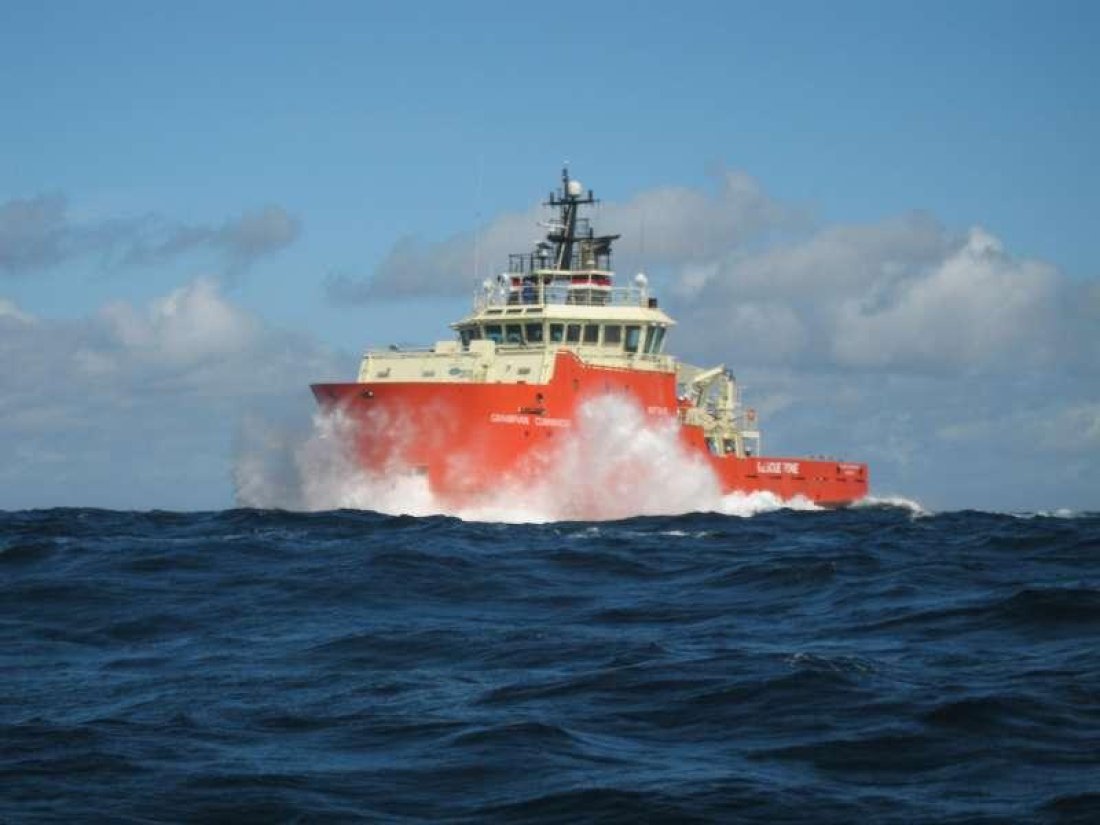
Today (Monday, 6 July) marks the anniversary of Piper Alpha, the disaster that killed 167 men and changed offshore safety for good. One of the outcomes of the Lord Cullen inquiry that followed is a fleet of vessels most people outside the offshore sector may never have heard of, even though they stand by almost every installation in the North Sea, every single day and night.
By Jim Whyte, Operations Manager at North Star
The Cullen inquiry reshaped offshore safety from the ground up. It moved regulation from the Department of Energy to the Health & Safety Executive, introduced the safety case framework requiring operators to prove they had identified and controlled major hazards rather than simply follow prescriptive rules, and forced improvements in fire and blast protection, evacuation systems and workforce consultation. This regime is rightly seen as Cullen's central legacy.
But Cullen also examined something narrower and more immediate - what happens in the minutes after something goes wrong. Piper Alpha brought to light key areas where improvements to standby vessel capability and rescue co-ordination could be made. His recommendation was direct, that every platform in the North Sea should have a dedicated, properly equipped rescue ship standing by, continuously, for exactly this kind of catastrophe.
This recommendation created the modern Emergency Response and Rescue Vessel (ERRV) fleet, though the roots of these ships go back further than Cullen. Long before dedicated ERRVs existed, it was North Sea fishing boats and their crews, seamen from Scotland and East Anglia, who stood in as the industry's first informal safety net, using seamanship built over generations to support offshore platforms that had no dedicated rescue provision at all. This is where North Star's story began - 140 years of seafaring heritage that carried us from the fishing fleets into the offshore standby operations we are known for today. Cullen didn't invent the idea of a standby vessel, but he made it a requirement, turning an improvised solution into a professional, regulated discipline.
North Star is the UK's market-leading fully integrated offshore infrastructure service provider, delivering mission-critical offshore infrastructure support services across the oil and gas and offshore wind sectors. Within the business, we operate 37 ERRVs, providing safety cover for around 50 North Sea installations continuously, 365 days-a-year. Behind this fleet,there are more than 1,000 seafarers, whose sole job is to be ready.
Rescue and recovery is the primary role, but it's far from the only one. Our ERRVs support various operational modes such as monitoring radar around the clock for ships straying too close to an installation's 500-metre exclusion zone, providing cover for helicopter flights to and from platforms, and carrying oil dispersant to respond to any spill or leak offshore. Anumber of our ships are also multi-role, transferring fuel, fresh water and cargo to installations across the North Sea. It's a level of vigilance that goes largely unnoticed, precisely because it's working.
Each vessel, with a crew of 12 to 15, is purpose-built and equipped to provide immediate medical care and stabilise casualties until further medical assistance arrives, surveyed annually by the MCA and/or Class in accordance with the standards set out in the OEUK/ERRVA ERRV Survey Guidelines, a joint industry guide. Fast rescue craft and larger enclosed daughter craft that can operate autonomously, a fully equipped treatment room and a dedicated winching zone for helicopter evacuations. When weather and sea conditions are too rough even to launch a rib, crews can use a crane-mounted Daycon rescue scoop to pull a casualty directly from the water.
But equipment alone doesn't save lives at sea, it’s the people operating it who do. That's why crew competency sits at the heart of everything an ERRV is built to deliver and why North Star invests millions annually to ensure our seafarers have the skills and confidence to carryout this responsibility when it matters most. These are highly skilled mariners, not just ‘crew on standby’. Many have spent decades at sea, and the trust placed in them to be the last line of defence for everyone offshore, is not something taken lightly.
Crews are qualified to the mandatory OPITO ERRV Crew ITSO standard, built specifically around this role, on top of mandatory seafaring qualifications. Everyone completes sea survival and casualty-handling training, with selected roles going on to advanced medical and rescue boat qualifications. Bridge officers undertake command and control training for handling incidents and emergency situations, and also hold specialist radio licences enabling direct contact with the UK Coastguard's search and rescue helicopters.
The seafarers work 28-day offshore rotas, and an ERRV will not ordinarily leave its position without a relief vessel taking over first, a rigour that has kept our fleet permanently on station without exception. Crews are tested every year under live conditions, proving they can recover a survivor from the water quickly enough to matter - the only acceptable standard when the entire purpose of an ERRV is to be there the one time it's needed.
For the most part, this readiness is theoretical, but occasionally, it isn't. Since our ERRVs began operations, we have carried out around 150 rescues. Last year, one of our ships, the Putford Jaguar, was in the vicinity when the US oil tanker Stena Immaculate, carrying jet fuel and anchored 14 miles off the East Yorkshire coast, was struck by the Portuguese-flagged cargo ship Solong and tragically, one crew member died. Our ERRV team assisted with firefighting and the search and rescue effort that followed.
Not every callout is on that scale and our ERRVs often step in simply because they were the nearest help available. This has included towing yachts in difficulty, going to the aid of fishing vessels and recovering swimmers in distress.
Our role is always to protect lives at sea and it's a responsibility our crews carry out every day, supported by our shore-based teams, in some of the most demanding environments in the world. Piper Alpha is the reason this obligation and commitment exists and 38 years on, it's one we'll never forget.