
May 19 2026
Walk to Work Gangways: Technology Isn’t the Hard Part - Judgement Is
By Steve Myers, SOV Operations Director
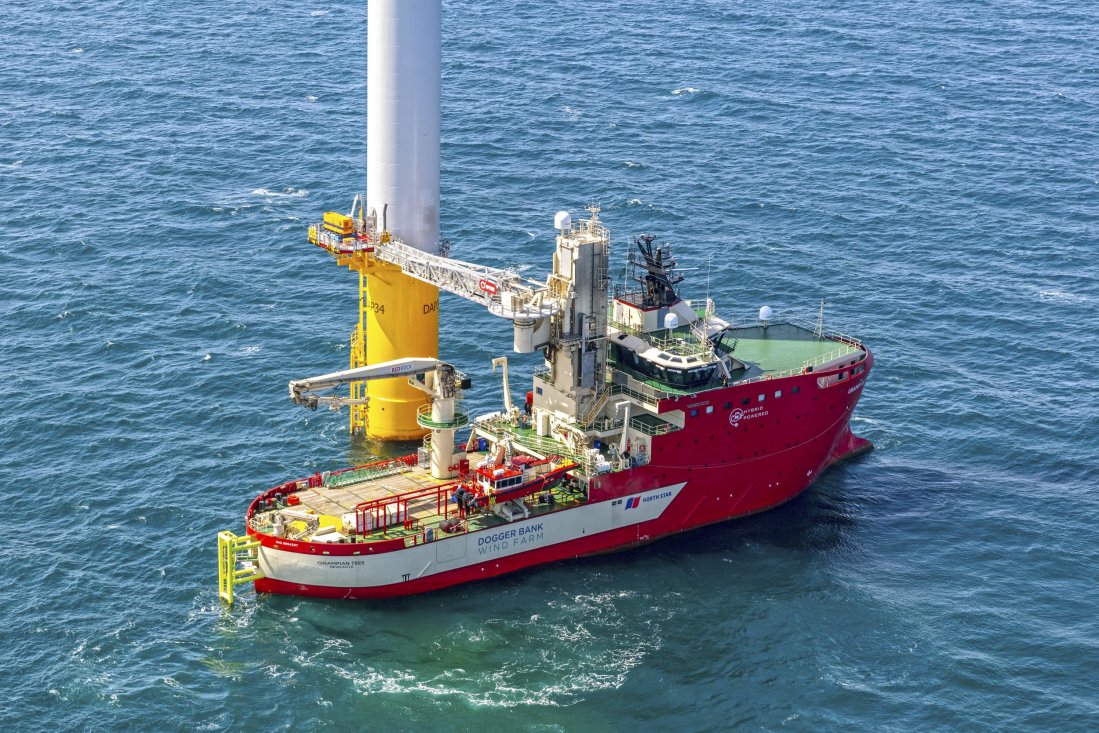
Walk to work gangways have become a defining feature of offshore wind operations. They enable safe access and support the scale at which the sector now operates.
But as their use has expanded, one thing has become increasingly clear to me: The real challenge in walk to work operations isn’t the technology - it’s how we collectively understand, govern, and apply it.
Experience Helps - But It Doesn’t Replace Thinking
Across North Star’s SOV operations, we have now supported more than 50,000 safe personnel transfers using motion‑compensated gangways. That level of exposure matters - not because it guarantees future safety, but because it builds perspective.
Experience shows you where systems perform well, where assumptions start to fray, and where human behaviour becomes the dominant factor.
It also teaches humility. Volume is not a safety metric in its own right. What it does provide is a deeper appreciation of variability - in weather, assets, people, and decision‑making under pressure.
The sector should also be cautious about how safety performance is interpreted. High transfer counts or extended operating envelopes can easily become comforting narratives, even when they mask growing exposure. Good judgement is rarely demonstrated by how far limits are pushed - but by how consistently conservative decisions are made when no one is watching.
Standards Are Evolving - And That’s Not a Criticism
Offshore wind is still a relatively young sector. While there are established standards and guidance that apply to walk‑to‑work systems, no single, fully harmonised benchmark yet captures every operational scenario.
That creates space for interpretation - and with it, the risk of inconsistency.
This isn’t a failure of standards. It’s a reflection of how quickly the sector has grown. The responsibility therefore sits with duty holders to apply engineering judgement, justify applicability, and actively reduce risk, rather than rely on inherited norms or sector crossover.
Borrowing practices wholesale from adjacent sectors may feel familiar - but familiarity does not equal suitability.
In practice, this means repeatedly returning to first principles. Walk‑to‑work operations sit firmly within an ALARP‑driven environment, where decisions cannot be reduced to checklist compliance. Understanding what risk remains, who is exposed to it, and whether further reduction is reasonably practicable in that moment is critical.
Just as importantly, decision authority must remain clear and local to the risk, supported - not overridden - by shore‑side systems. When accountability is blurred, judgement degrades.
Leadership Beyond the Gangway
At North Star, we see walk‑to‑work not simply as a piece of equipment, but as a system of systems - technology, people, procedures, governance, and culture operating together.
That thinking underpins how we operate our SOV fleet and how we engage across the wider industry. Our intent is not to position our approach as the answer, but to be open about what we are learning, where uncertainty remains, and how risk is genuinely being managed in live operations.
Alongside this, I have the privilege of serving as Vice‑Chair of the IMCA Marine Renewable Energy Committee and Chair of the Walk‑to‑Work Subgroup. These forums exist for a reason: to confront variability, challenge assumptions, and help the industry move away from fragmented or inconsistent interpretations towards a more coherent, risk‑aware baseline.
Progress here is rarely fast and often unseen, but it is how industries mature safely. Isolated solutions help no one.
Why Industry Engagement Actually Matters
One of the most important safety controls in walk‑to‑work operations doesn’t sit on the vessel or the gangway - it sits between organisations.
Active engagement through industry forums, working groups, and cross‑sector dialogue is how:
- Variance is identified before it becomes normalised
- Learning is shared beyond individual projects
- Expectations begin to align across operators, clients, OEMs, and regulators
This work is rarely visible and never quick, but it is foundational. Without it, each organisation is left solving the same problems in isolation.
Clients Aren’t Observers - They’re Part of the System
Safe walk‑to‑work operations are not delivered by vessel operators alone.
They are shaped by how operators and clients work together to develop shared understanding around:
- Risk exposure
- Operational boundaries
- Competence expectations
- Response to abnormal or emergency situations
When that understanding is aligned, decisions are made deliberately. When it isn’t, pressure fills the gaps.
Much of the industry’s comfort with walk‑to‑work comes from operations carried out in normal, well‑understood conditions. The real test of maturity appears when systems are degraded, environmental conditions evolve faster than forecasts, or data quality reduces.
These are not failure states - they are operational realities. What matters is whether crews are empowered to slow down, step back, and recalibrate decisions without commercial or schedule pressure distorting risk acceptance.
The Most Important Control Is Still Human
For all the focus on technology, procedures, and standards, the most important part of any walk‑to‑work transfer remains unchanged:
The person walking across the gangway.
Their competence, situational awareness, and ability to respond under stress matter just as much as any engineered safeguard - especially when conditions change or something doesn’t behave as expected.
Meaningful safety improvement in this space must therefore address human factors, not just hardware.
A Thought for the Sector
If offshore wind wants walk‑to‑work operations to be both scalable and safe, the answer won’t come from a single document, system, or supplier.
It will come from:
- Experience applied responsibly
- Standards applied thoughtfully
- Industry engagement taken seriously
- And a continued focus on the people at the centre of the transfer
That’s where judgement lives - and where safety is ultimately decided.
"Walk‑to‑work may look routine from the outside, but for the person making that crossing it is always a deliberate act of trust - in the system, in the people who defined its limits, and in the leaders who decide how it is used."